
2 to 3 hours
Temples of the Tamil Quarter, Pondicherry
The city's older history lies just across the canal, in the streets traditionally known as the Tamil Quarter. Here, temples, markets, and family houses reveal a settlement that long predates the arrival of the French East India Company in 1674.
For many visitors, the French Quarter defines Puducherry. Yet the city's older history lies just across the canal, in the streets traditionally known as the Tamil Quarter, now recognised as Heritage Town. Here, temples, markets, and family houses reveal a settlement that long predates the arrival of the French East India Company in 1674.
The canal, today called the Grand Canal, became the dividing line between two urban worlds. To the east lay the planned colonial town of broad avenues and European public buildings. To the west, Tamil neighbourhoods continued to develop around temples, markets, and artisan communities. The result is one of the most distinctive urban landscapes in India, where two traditions evolved side by side while remaining closely connected.
Exploring the temples of the Tamil Quarter offers a glimpse into the religious and cultural life that has shaped Puducherry for centuries.
Manakula Vinayagar Temple
Although it stands within today's French Quarter, Manakula Vinayagar Temple belongs historically to the older Tamil settlement. The temple was already established when the French founded Pondicherry in 1674 and remained on its historic site despite repeated eighteenth-century attempts by the colonial administration to relocate it.
Dedicated to Vinayagar, the Tamil form of Ganesha, the temple is among Puducherry's most visited places of worship. Its gold-plated gopuram, colourful sculptures, painted ceilings, and richly decorated halls make it one of the city's most impressive temple interiors. Daily pujas are held throughout the day, with the morning and evening ceremonies attracting the largest gatherings of devotees.
Sri Varadaraja Perumal Temple
A short walk into the Tamil Quarter stands Sri Varadaraja Perumal Temple, one of Puducherry's principal Vaishnavite temples. Dedicated to Vishnu as Varadaraja Perumal, the temple is of medieval origin and continues to serve as an active centre of worship. Unlike the more visited Manakula Vinayagar Temple, it offers a quieter experience, allowing visitors to appreciate its traditional Dravidian architecture and the rhythms of daily temple life.
Vedapureeswarar Temple
Dedicated to Shiva, Vedapureeswarar Temple is among Puducherry's most important Shaivite shrines. The present temple dates to the eighteenth century, following the destruction of an earlier temple during the colonial conflicts of the 1740s. Rebuilt by the local community, it remains an active place of worship and an important reminder of the resilience of Puducherry's religious traditions during a turbulent period of its history.
Siddhivinayakar Temple
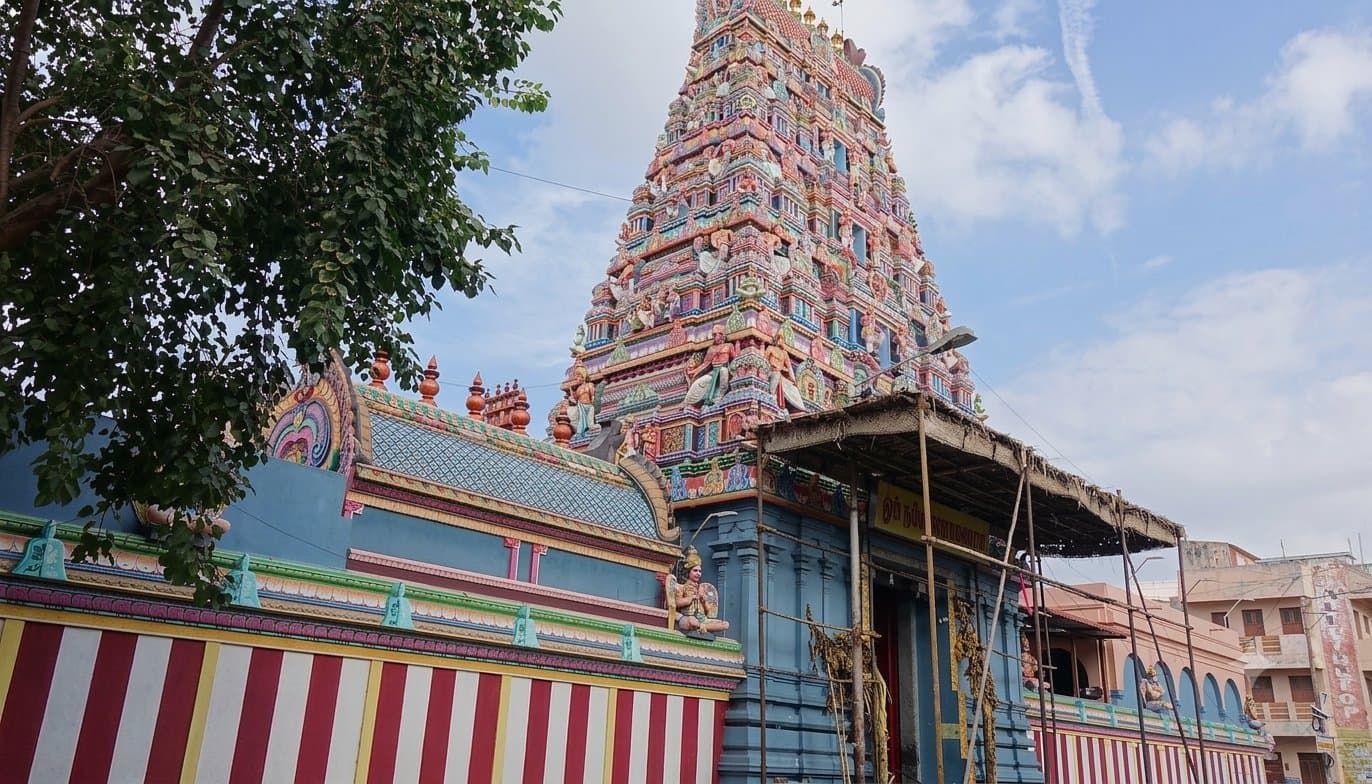
Often called Elai Pillaiyar Koil, or the "Temple of the Poor", Siddhivinayakar Temple is one of the oldest neighbourhood shrines in Heritage Town. Dating to the early eighteenth century, it is dedicated to Vinayagar and has served generations of local residents. Modest in scale compared with Manakula Vinayagar Temple, it offers a glimpse of everyday devotional life away from the city's busiest tourist sites. Its nineteenth-century gopuram rises above the surrounding streets, while the quiet inner courtyard provides a welcome contrast to the bustle outside.
Worth the Short Journey: Sri Gokilambal Thirukameshwara Temple, Villianur
About eight kilometres west of the city centre stands Sri Gokilambal Thirukameshwara Temple, one of the oldest and most important temples in the Puducherry region. With origins in the Chola period, the temple is dedicated to Shiva as Thirukameshwara and to Goddess Gokilambal. Its spacious temple tank, towering gopuram, and broad courtyards make it one of the finest examples of Dravidian temple architecture in the Union Territory.
The temple is especially renowned for its annual car festival, during which the massive wooden chariot is drawn through the streets of Villianur by thousands of devotees. Visitors seeking a deeper understanding of Puducherry's religious heritage will find the short journey well worthwhile, offering a perspective that extends beyond the colonial city to the region's much older Tamil past.
Visiting the Temples
Once a year, on Masi Magam, dozens of temples across the city carry their deities out of these same sanctuaries in procession to Vaithikuppam Beach for a ceremonial bath in the sea, one of the largest religious gatherings the Tamil Quarter sees all year.
Visitors are welcome at all these temples, provided they observe local customs. Shoes must be removed before entering the temple precincts, and modest clothing covering the shoulders and knees is expected. Photography policies vary between temples and may also differ within individual parts of a temple, so it is always best to look for signs or ask permission.
The innermost sanctum is generally reserved for Hindu worshippers, but visitors of all faiths are welcome in the outer halls and courtyards, where they can observe the architecture, rituals, and devotional life with respect.

The Pondy App
Take this guide with you
Offline maps, street-level history, restaurant picks, and hotel guides: everything on this site, in your pocket.