
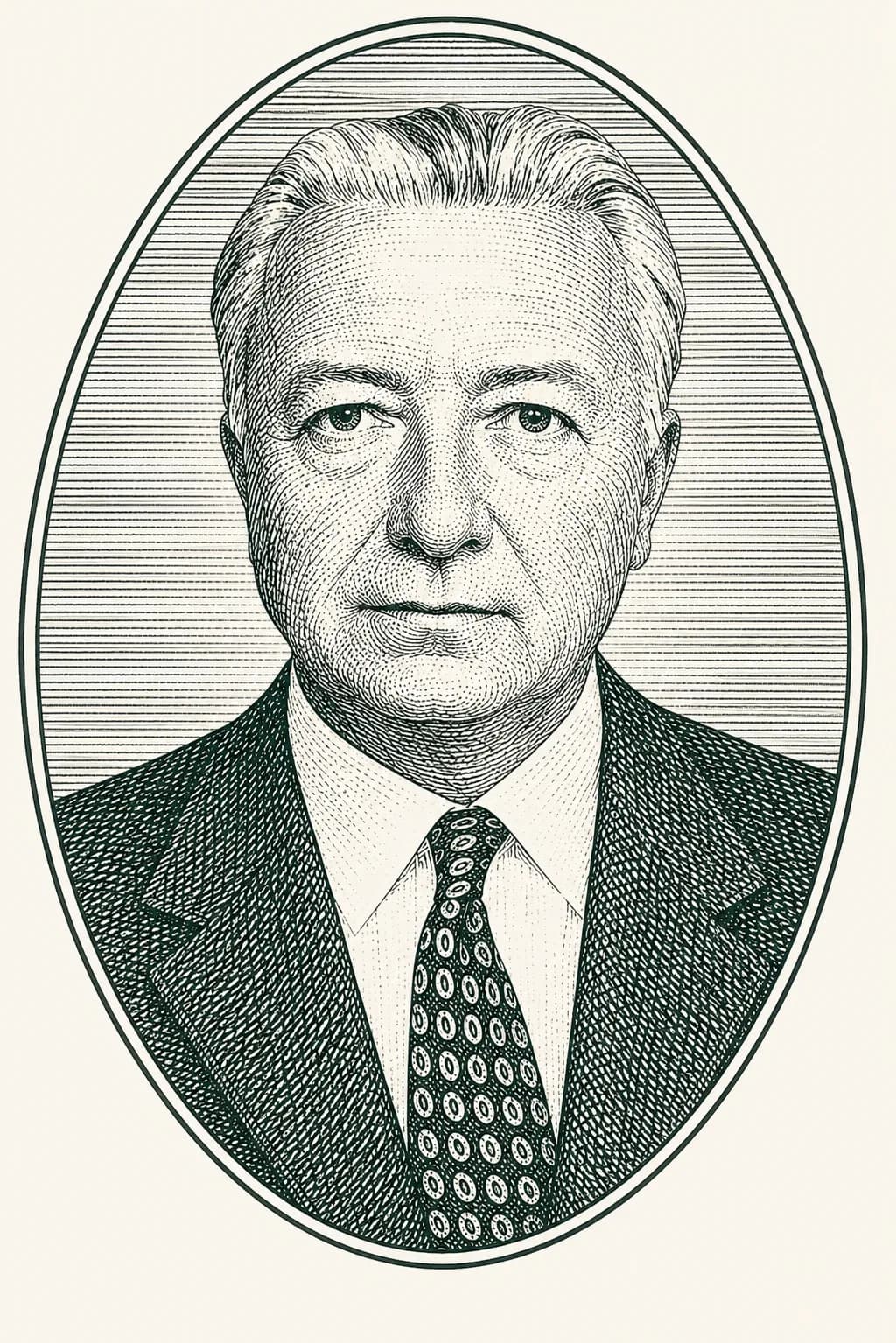
1900–1980
Charles François Baron, Pondicherry
Last Governor of French India
The first Gaullist in history, disciple of Sri Aurobindo, and last Governor of French India: a life that moved from the salons of Paris surrealism to a Singapore poisoning attempt to the spiritual corridors of the White Town.
THE GOVERNOR WHO KNELT BEFORE A YOGI
Charles François Baron was born in Paris in 1900, spent his early twenties on the fringes of the nascent surrealist movement, present at gatherings where Louis Aragon, Man Ray, and André Breton were defining what would become surrealism, then departed for West Africa in 1927 after completing law studies and colonial administration. He made a first visit to Pondicherry around 1935 as a traveller passing through, encountered disciples of Sri Aurobindo in the streets at sunset, and had the conversations about Hindu philosophy that planted a spiritual curiosity he would spend the rest of his life developing.
When France fell in June 1940 and de Gaulle broadcast his appeal from London, Baron was serving at Chandernagore, the small French Bengal enclave. He responded immediately. According to his son Jean-Marie, confirmed with one of de Gaulle's principal biographers, the first telegram received by de Gaulle in London was sent by François Baron, making him, if the claim holds, the first Gaullist in history. Appointed Free French representative for all of East Asia, based in Singapore, his name appeared on a Japanese list. He survived a strychnine poisoning attempt, attributing his survival to an opium addiction contracted in common with a number of colonial-era diplomats, which provided an accidental antidote. He spent evenings at the Raffles Hotel bar, where, his biographer notes, Hemingway was occasionally present, before the Japanese advance forced him east. He escaped through Hong Kong, Manila, and Algiers, reaching London in 1942 and befriending Joseph Kessel and Maurice Druon as they completed Le Chant des Partisans.
Appointed Governor of French India in 1945, he served through the entire transfer period until 1954. Among those he brought to Pondicherry that year was a young French veteran named Bernard Enginger, later known as Satprem, who weighed approximately 35 kilograms after wartime hardship and, by his own account, was contemplating suicide. Baron installed him as his personal secretary. Enginger's encounter with Sri Aurobindo and the Mother at the Ashram transformed him into one of the most significant figures in the Aurobindo tradition: author of works credited with drawing hundreds of thousands of seekers to Pondicherry.
In September 1947, Baron arranged a meeting between Sri Aurobindo, in strict seclusion since 1926, and Maurice Schumann, wartime voice of the Free French and later French Foreign Minister. At the beginning of the meeting, Baron, as a professed disciple, knelt before Sri Aurobindo. Schumann later recalled Sri Aurobindo's observation: "He had become a man of action because he met de Gaulle; and he became a mystic because he met Sri Aurobindo." When Baron left Pondicherry at the end of his mandate, the population of the city followed his car to the territorial boundary.

The Pondy App
Take this guide with you
Offline maps, street-level history, restaurant picks, and hotel guides: everything on this site, in your pocket.