
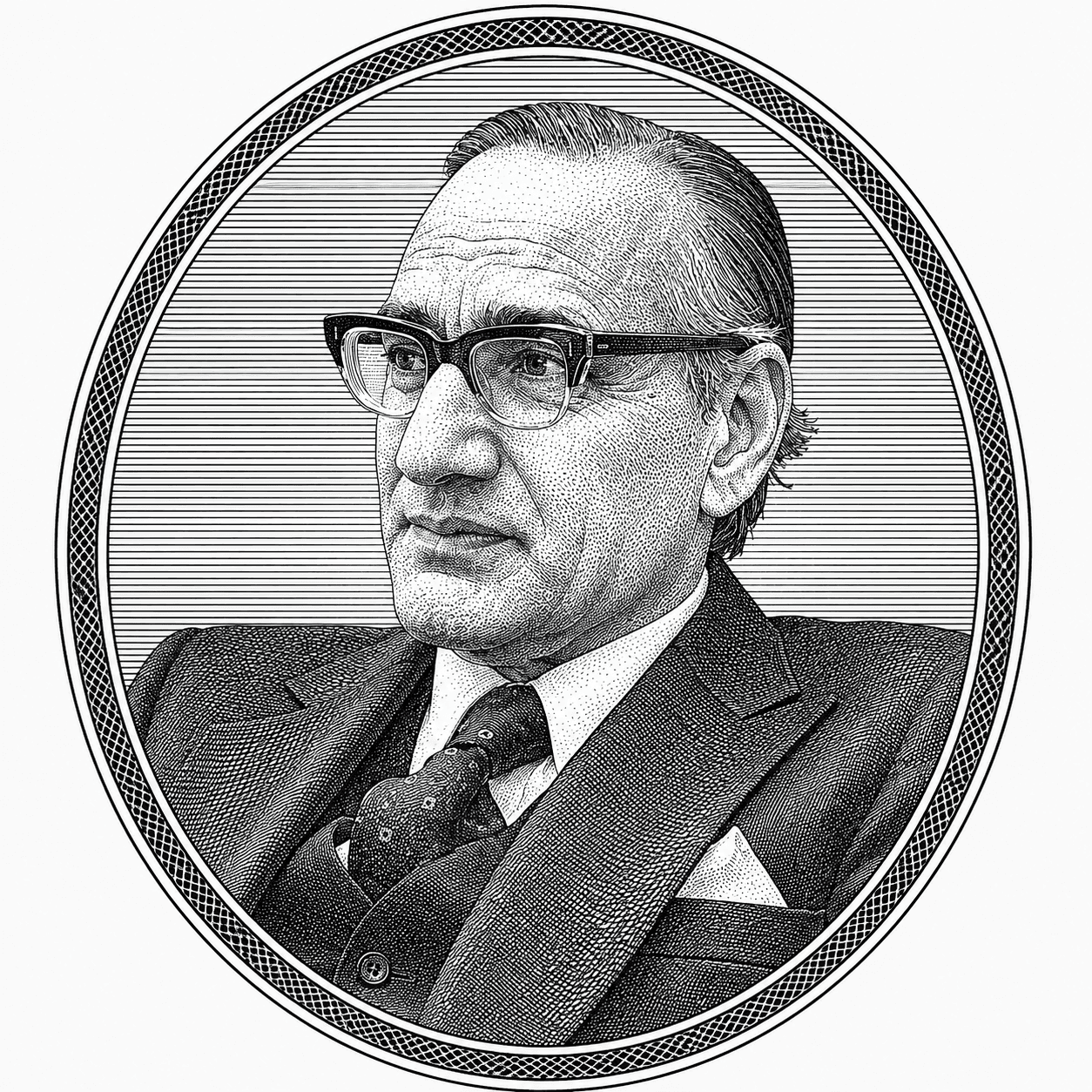
1915–1991
Kewal Singh, Pondicherry
Consul-General of India, then first Chief Commissioner of Pondicherry
He was India's Consul-General in French Pondicherry, and on the day of the 1954 referendum became its first Chief Commissioner too, holding both roles at once during the handover before going on to become Foreign Secretary of India.
THE OPERATIONAL HAND BEHIND THE HANDOVER
Kewal Singh Choudhary was born into a Sikh family in West Punjab in 1915, educated at Forman Christian College and the Law College in Lahore, then at Balliol College, Oxford, and joined the Indian Civil Service in 1939, serving in Punjab administrative posts through the final years of the Raj. After Independence he transferred to the newly created Indian Foreign Service, with postings in Turkey and Berlin before his assignment, in October 1953, to French India, succeeding R. K. Tandon as Consul-General at the Indian consulate on rue des Capucins, the street known today as rue Romain Rolland.
He arrived at the most tense possible moment. The campaign to merge the French settlements with India had been building since 1947, Nehru's government was applying sustained diplomatic pressure, and the French administration under Governor-General Georges Escargueil was operating under an Indian economic blockade. On 21 October 1954, the Kizhoor referendum put the merger agreement negotiated between Paris and New Delhi to the elected representatives of the French settlements, who voted 170 to 8 in favour. On that same day, the Government of India appointed Kewal Singh the first Chief Commissioner of the French Establishments in India, effective from 1 November. For a short window he held both posts at once, Consul-General and Chief Commissioner, embodying in a single person the entire handover from French to Indian administration. He went on to oversee the territory's first two years under Indian rule, replacing three centuries of French legal, judicial, and fiscal machinery with Indian systems, a task considerably more complicated than the political agreement that authorised it. He received the Padma Shri in 1955 for the work.
What followed was one of the more improbable careers in Indian diplomacy, built almost entirely on being sent wherever a relationship had just broken down. He was Ambassador to Portugal in 1962, immediately after India's annexation of Goa had severed relations between New Delhi and Lisbon. He was High Commissioner to Pakistan in 1965 and 1966, exactly when the Indo-Pakistani War broke diplomatic ties for the second time in his career. Postings to the Soviet Union, Mongolia, and Germany followed, and in December 1972 he was appointed Foreign Secretary of India, the most senior civil service position in Indian diplomacy, serving through the absorption of Sikkim in 1975 and a maritime boundary agreement with Sri Lanka before finishing his career as Ambassador to the United States.
After retirement he taught at UCLA and held the title of Distinguished World Statesman in Residence at the University of Kentucky until his death in 1991. His memoir, Partition and Aftermath, published the year he died, covers a career that took him from a Sikh Civil Service posting in colonial Punjab to the exact administrative center of one of the last acts of French colonialism in Asia, and from there to nearly every major rupture in Indian foreign relations for the following two decades.

The Pondy App
Take this guide with you
Offline maps, street-level history, restaurant picks, and hotel guides: everything on this site, in your pocket.