
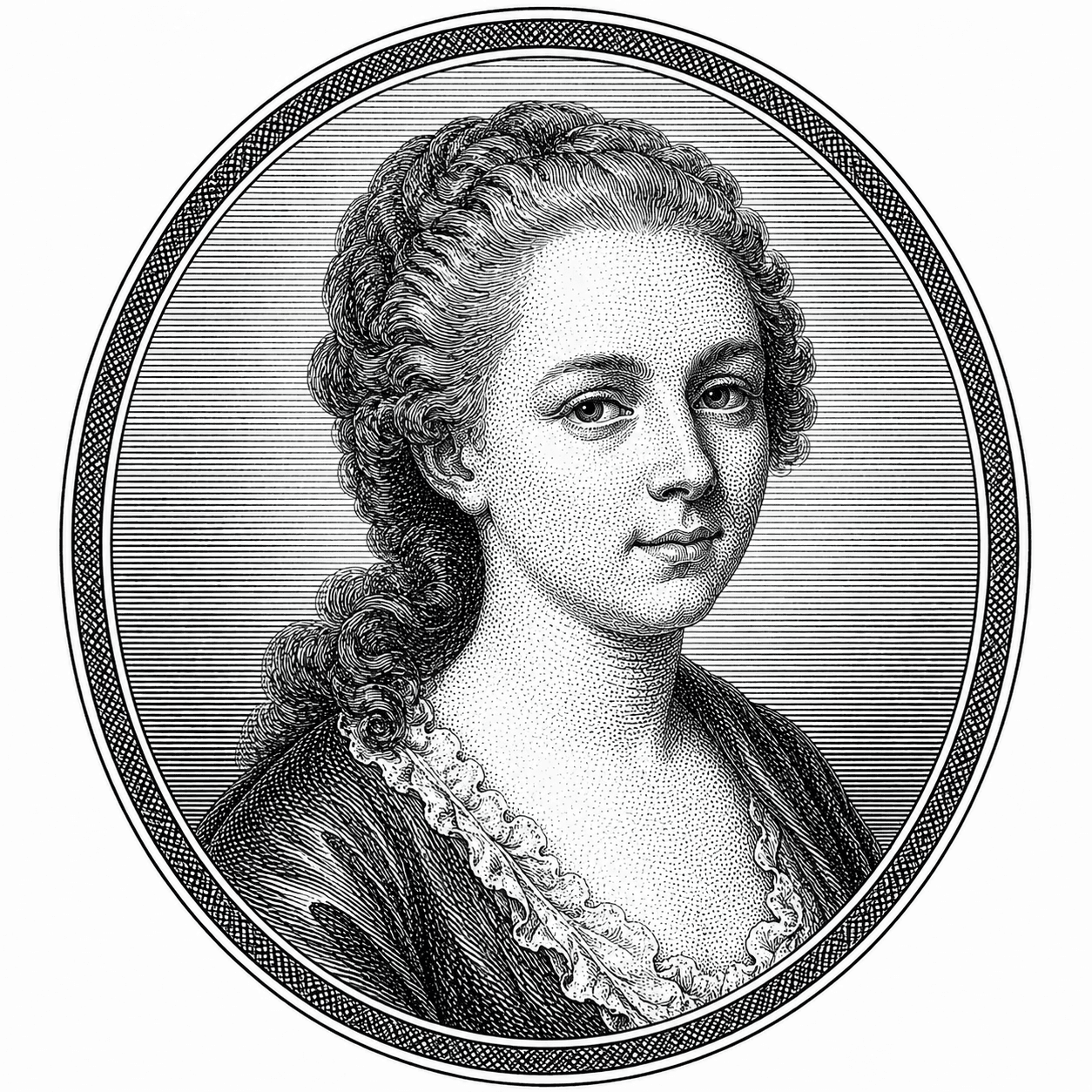
c.1706–1756
Jeanne Dupleix, Pondicherry
Political adviser and intermediary to Governor-General Dupleix
Fluent in Tamil, Telugu, and Persian, Jeanne Dupleix ran the diplomacy her husband's French officers could not, and Ananda Ranga Pillai's diary recorded her every move with a mixture of admiration and unease.
THE GOVERNOR'S OTHER HALF
Jeanne Dupleix was born in Pondicherry around 1706 into the Franco-Indian Creole community that occupied the middle ground of the French establishment, neither metropolitan French nor Tamil Indian. Her mother was of part-Indian descent; her father, Jacques Vincens, was a French merchant settled in the city. She grew up fluent in Tamil, Telugu, and Persian as well as French, in a colony where French officers routinely needed interpreters just to conduct business. Her first marriage, to a French councillor, left her a widow with children and real standing in Pondicherry society by the time she met Joseph François Dupleix, newly arrived as Governor-General. They married in 1741.
What followed was unusual for any period of eighteenth-century colonial government: a governor's wife who was also a working political partner. Ananda Ranga Pillai, Dupleix's own dubash, recorded her activities in his diary in extraordinary detail, and his account is the most complete portrait of any woman in the primary sources for French India. He documents her direct involvement in appointing the colony's chief interpreter, in commercial licensing, in receiving Indian princes and their delegations, and in negotiating the political relationships on which her husband's entire protectorate strategy depended. Where French officers needed interpreters and went through formal channels, she went directly to the wives and female relatives of Indian rulers, women who were themselves serious political actors, and built the kind of access her husband could never have obtained on his own.
Pillai's diary does not flatter her. He also records her willingness to receive gifts in exchange for influence over appointments, and her direct hand in commercial contracts and personal disputes across the French establishment. He portrays a woman who understood the patronage systems that ran through both French and Indian society and who worked both simultaneously, for the colony's benefit and her own. When the pretender Muzaffar Jung's delegation arrived at Pondicherry in December 1749, ahead of his proclamation as Nizam, it was Jeanne Dupleix who received them.
When Dupleix was recalled to France in 1754, having been stripped of the protectorate he had spent twelve years building, Jeanne went with him. She died in Paris in 1756, two years before her husband, who lived on in increasing poverty and bitterness until 1763, still trying and failing to recover the fortune he had put into French India. She remains one of the most politically consequential women in the history of the French settlements, and one of the very few whose voice, however filtered through Pillai's suspicious admiration, survives at all.

The Pondy App
Take this guide with you
Offline maps, street-level history, restaurant picks, and hotel guides: everything on this site, in your pocket.