
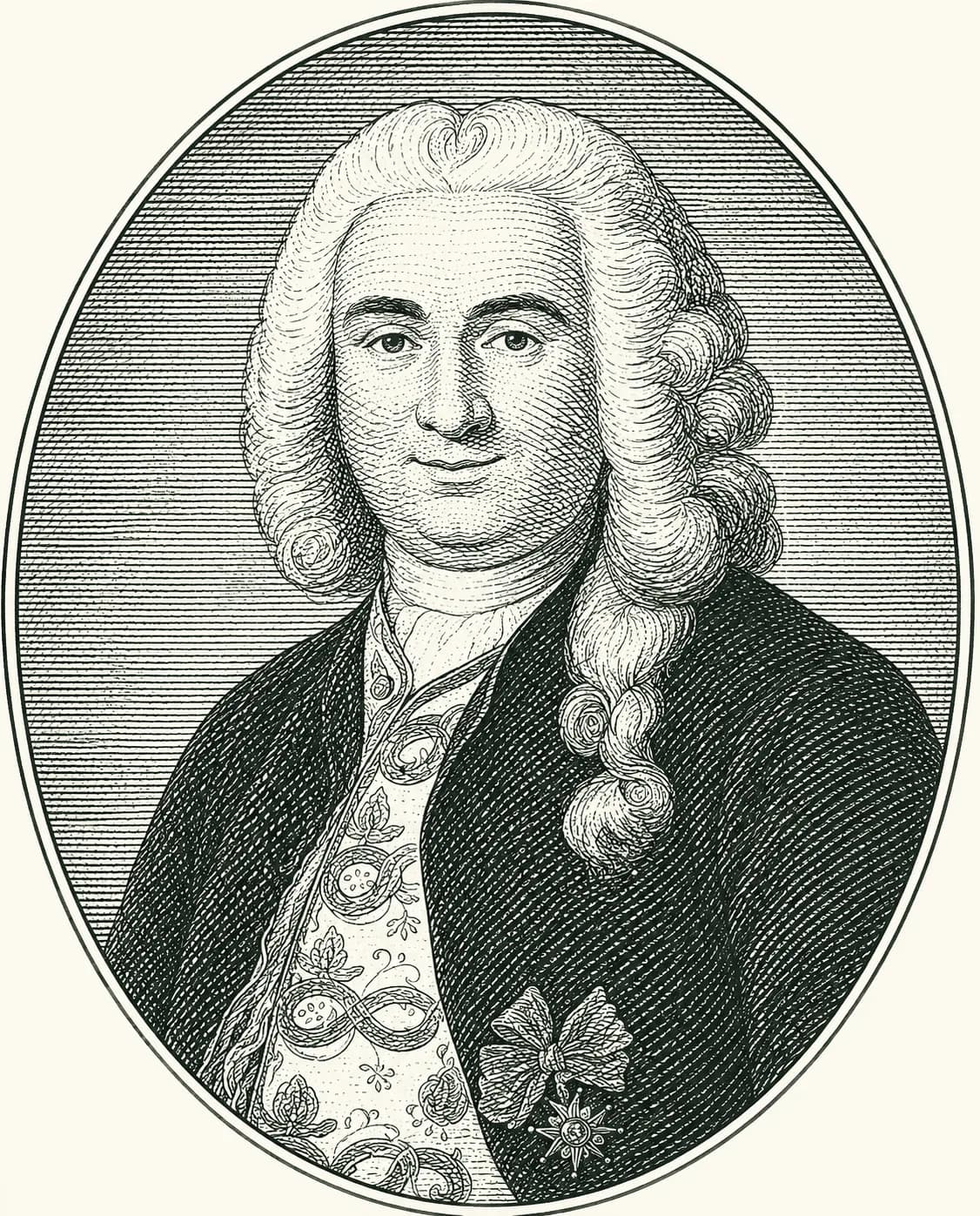
1699–1753
Bertrand François Mahé de La Bourdonnais, Pondicherry
French Naval Commander
The admiral who captured Madras for France in 1746, then squandered the victory in a furious quarrel with Dupleix over what to do with it, and paid with his liberty and his health.
THE ADMIRAL FROM SAINT-MALO
La Bourdonnais was born in Saint-Malo in 1699 in the great Breton port that produced generations of privateers, corsairs, and naval officers. He went to sea early, accumulated experience across the Indian Ocean trade routes, and in 1735 was appointed Governor of the Île de France (Mauritius) and Île Bourbon (Réunion). At these twin island bases he proved an exceptional organiser: he built harbour facilities, opened roads, and assembled, largely from his own resources and commercial enterprise, a small but capable naval squadron. That squadron was not the French East India Company's fleet. It was effectively his private instrument.
When war with Britain opened following the Austrian Succession, he sailed from Mauritius to the Coromandel Coast and accomplished what the Company had consistently failed to do: he drove off the British naval squadron and laid siege to Madras. Fort St. George fell in September 1746. It was the single greatest French military achievement in India to that date, and it humiliated the British East India Company in front of every Indian ruler who had been watching the Franco-British contest with interest.
What followed was a catastrophe of a different order. La Bourdonnais had promised the British garrison lenient terms, a cash ransom, civilian parole, and a French departure before the northeast monsoon closed the anchorage. Dupleix wanted to retain Madras as a permanent French possession. The quarrel between them was bitter, public, and consequential: La Bourdonnais departed with his squadron, leaving a garrison without naval support; the position eventually proved untenable.
He returned to France expecting recognition. Instead, his enemies were waiting. Imprisoned in the Bastille in late 1746 on charges connected to the Madras dispute, he spent nearly two years there before acquittal in 1748, but the imprisonment destroyed his health. He spent his remaining years writing his memoirs, a vigorous defence of his conduct, and died in Paris in November 1753, aged fifty-four, still unrecognised, while Dupleix was still governing in Pondicherry and the wars he had begun were still being fought. Two streets in the White Town, Rue Mahé de La Bourdonnais and Labourdonnais Street, still carry his name.

The Pondy App
Take this guide with you
Offline maps, street-level history, restaurant picks, and hotel guides: everything on this site, in your pocket.