
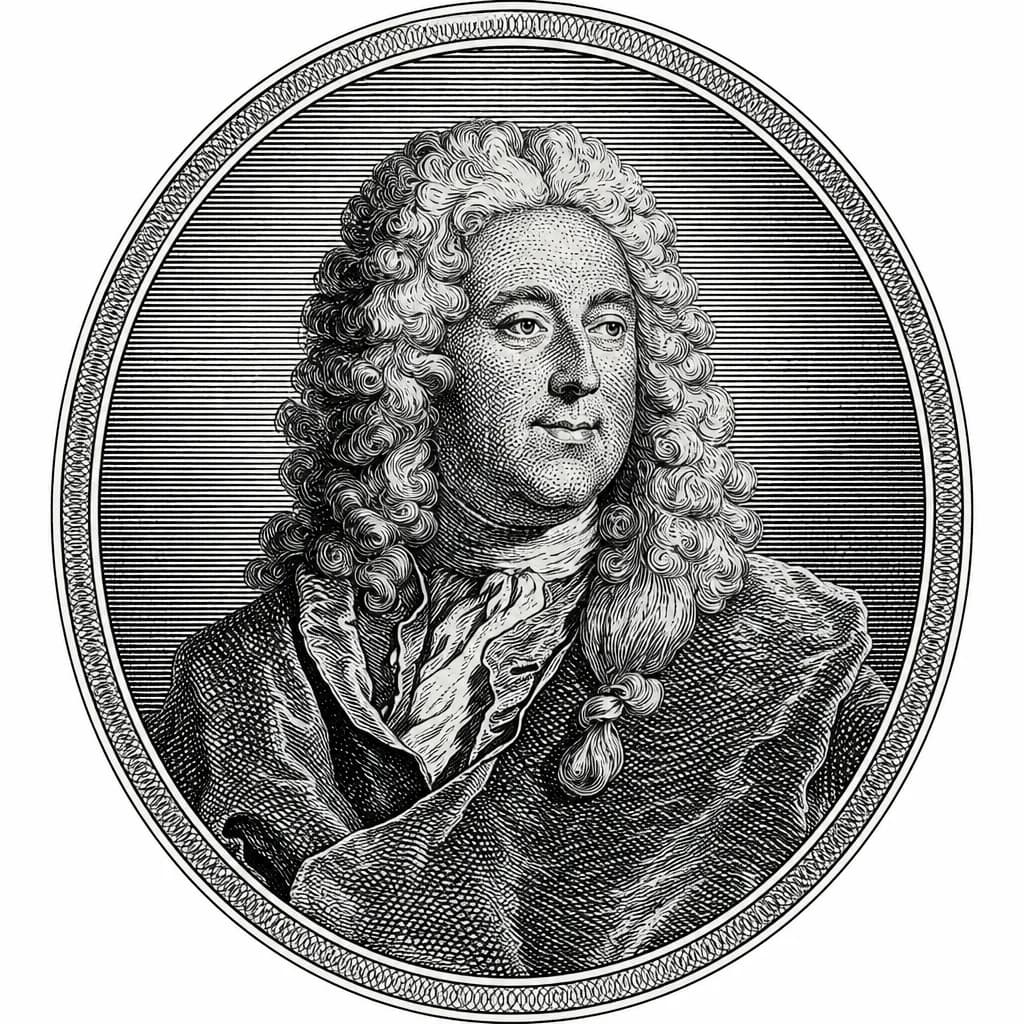
1719–1797
Law de Lauriston, Pondicherry
French Military Officer
The French officer who surrendered the last French field force in the Carnatic at Srirangam, on the same afternoon, and possibly the same hour, that Chanda Sahib was beheaded a few miles away.
THE SURRENDER AT SRIRANGAM
Jacques-François Law de Lauriston was born in 1719 into the Law family, connected by origin to the Scottish financier John Law whose famous "System," the Mississippi Bubble, which had briefly revolutionised French monetary policy before catastrophic collapse in 1720. The family association with spectacular ventures that ended badly was established before Jacques-François arrived in India. His career would confirm the pattern, through no particular fault of his own.
He entered French India Company service during the height of Dupleix's expansion and eventually took command of French forces in the Carnatic theatre at a moment when the strategic position had already turned against France. The British under Clive had seized and held Arcot; the siege of Trichinopoly, where the British-backed Muhammad Ali was entrenched, was going badly; the available French forces were inadequate for the task assigned to them. Law de Lauriston was handed a losing hand and played it as well as it could be played.
On 12 June 1752, on the island of Srirangam near Trichinopoly, he was encircled by Clive's forces and compelled to surrender. The capitulation was complete. On the same day, at what may have been the same afternoon hour, Chanda Sahib, the French-backed Nawab of the Carnatic whose installation had been the centrepiece of Dupleix's strategy, was captured by soldiers of the Tanjore army and beheaded. The convergence of these two events in a single afternoon marked the definitive end of Dupleix's Carnatic protectorate: the French military force gone, the Indian client ruler dead, the British-backed candidate Muhammad Ali confirmed as Nawab.
Law de Lauriston was released after capitulation, continued in French service, and lived until 1797, outlasting French India's military ambitions by more than four decades. He died the year Bonaparte returned from Egypt, while Napoleon was still dreaming of India. Rue Law de Lauriston in the White Town carries his name.

The Pondy App
Take this guide with you
Offline maps, street-level history, restaurant picks, and hotel guides: everything on this site, in your pocket.