
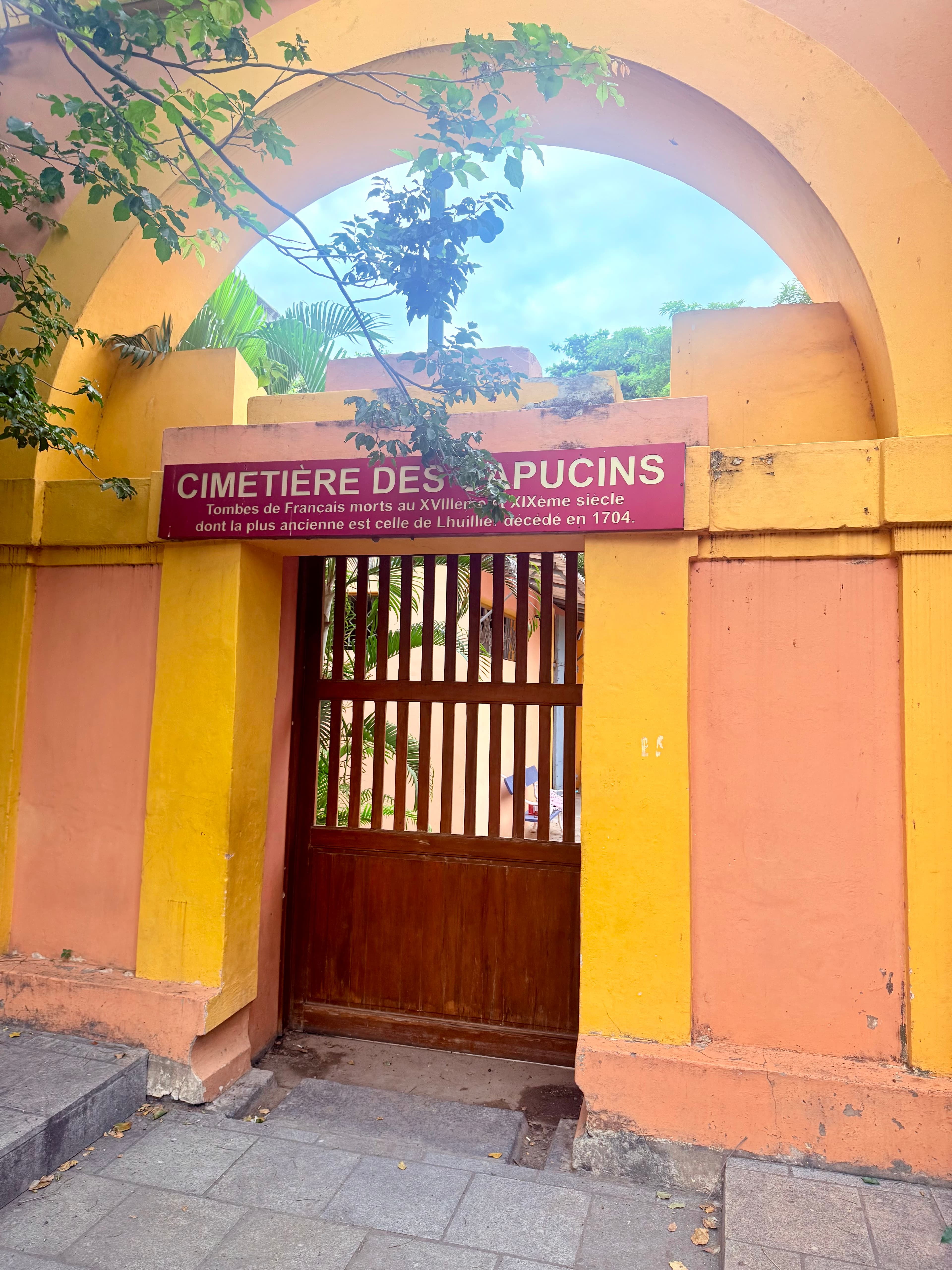
European Cemetery, Pondicherry
French: Cimetière européen
Built: c.1700 – present
You are standing at the European Cemetery on Rue Victor Simonel, in use since around 1700 and one of the oldest colonial burial grounds in South India. Governors, engineers, MEP missionaries, merchants, and three centuries of Franco-Pondicherrian families lie here. The tombstones are a primary historical source: they confirm dates, relationships, and careers that paper archives scattered across Paris, Aix-en-Provence, and Pondicherry can lose.
The European Cemetery on Rue Victor Simonel is, as one observer put it, the 'silent directory' of French India: a place where tombstone inscriptions confirm dates, relationships, and careers that paper archives scattered across Aix-en-Provence, Paris, and Pondicherry can lose. It has been receiving the French colonial dead since approximately 1700.
The oldest graves, in coral stone with simple Latin or French inscriptions, record the first generation of French colonial builders: Compagnie des Indes agents, MEP missionaries, and the early renonçant families. Tropical disease killed Europeans within months or years; governors' wives, children, and junior officials who did not survive their first monsoon fill this section. Many of the oldest stones have deteriorated severely, damaged by humidity, coastal salt air, and the neglect of the British occupation years when maintenance lapsed.
The nineteenth century is the best-represented period. The wealthier merchants and senior officials of the long peaceful century (1816 to 1954) built elaborate funerary monuments: neo-classical marble sarcophagi, neo-Gothic iron-railed enclosures, obelisks, and draped urns. The funerary vocabulary is entirely French, wholly distinct from Tamil burial practice. It is a physical expression of the same social division that produced the canal separating White Town from Black Town.
A second cemetery, attached to the Cathedral of the Immaculate Conception ('Samba Koil') on Rue Dumas, holds episcopal remains (300 years of bishops) and the graves of Indian and French MEP fathers.
What to look for
- Active since c.1700: governors, engineers, MEP missionaries, merchants, and Franco-Pondicherrian families.
- Neo-classical and neo-Gothic funerary monuments of the 19th century: marble sarcophagi, obelisks, iron-railed enclosures.
- Primary source: tombstone inscriptions verify dates and careers lost from paper archives.
- Separate bishops' cemetery at the Cathedral ('Samba Koil') on Rue Dumas holds 300 years of episcopal remains.
- Rue Victor Simonel is itself named for a colonial official killed at Verdun in WWI.
Hours: Daylight hours
Entry: Free
Tip: A quiet site, largely off the tourist circuit. Look for the coral-stone graves of the early colonial period alongside the grander 19th-century marble monuments.

The Pondy App
Take this guide with you
Offline maps, street-level history, restaurant picks, and hotel guides: everything on this site, in your pocket.