
Can Anyone from Pondy Become French?
The short answer is: not in the way it once was possible. But the way it was once possible is one of the strangest legal inventions of the colonial era, and understanding it explains why Pondicherry looks the way it does.
From the mid-nineteenth century until the transfer of 1962, French India ran a legal door that British India never had: a way for an Indian resident to formally step out of Hindu or Muslim personal law and step into full French citizenship, without leaving home or converting to anything. It produced a class of families who were French in every legal sense and Tamil in every cultural one, and their descendants are still part of Pondicherry today.
The Renonçant System
In British India, there was one category: subject of the Crown. In French India, the situation was more layered. Indian residents of the Five Settlements could, if they chose, formally renounce their personal law (the Hindu or Muslim legal framework governing marriage, inheritance, and family relations) and submit instead to the French Civil Code. The act was called renonciation. The person who completed it became a renonçant: legally French in all essential respects, subject to French courts, French civil registration, and French military conscription.
This was not symbolic. A renonçant family in Pondicherry in 1900 was governed by the Code Napoléon in the same way as a family in Bordeaux. Their marriages, their wills, their property disputes were handled by French judges under French law. Their sons, when they reached military age, received call-up papers from the French army.
A Cour de cassation ruling of 1852 had opened this pathway to all Indian residents of the Five Settlements. A presidential decree in 1881 confirmed and extended it. By the early twentieth century, the Tamil Catholic families of Pondicherry and Karikal had largely adopted renonciation across generations, producing a Franco-Pondicherrian bourgeoisie: French by law, Tamil by language and faith, educated in French schools, employed in French courts and offices.
Why People Chose It
The motivations were practical as much as cultural. French civil law offered, in principle, legal equality regardless of caste. French citizenship opened access to the colonial administration, to the bar, to the military, to movement across the French empire. For Tamil Catholic families who had already converted, the religious and cultural distance from French identity was manageable. For some, it represented a genuine aspiration. For others, a calculated professional decision. For many, it was simply the world they had been born into.
David Annoussamy, Pondicherry's great legal scholar, was himself from the renonçant community. He became a magistrate, then a High Court judge in Madras, then the founding director of the Pondicherry Law College after the transfer. He spent his career documenting what French law had built here and what happened to it when the flags changed. He died in January 2026, aged 98, with full State honours.
In his book on French India's legal history, he opened with a characteristic observation: whenever he was introduced to someone in France, they would recite the names of the five settlements with delight, then ask whether French was still spoken in Pondicherry. His invariable reply: "On le parle plus qu'avant, mais on l'écrit moins." We speak it more than before. We write it less.
The Option of 1962
When French India was transferred to India in stages, its residents faced a formal choice. A six-month window opened in March 1963. Those who wished to retain French nationality filed individual declarations. Annoussamy counted 4,944 such declarations, representing more than 5,000 Tamil-descent family units by another count. These were the optants. They remained in Pondicherry as French citizens, in Indian streets, holding French passports. By 2007, around 15,000 French nationals of Indian origin were still living in India. Between 20,000 and 40,000 had emigrated to France, concentrated in Paris and forming the oldest layer of what would become a larger Tamil community there.
What Remains Today
The renonçant system no longer exists. The 1963 option window is closed. The pathways to French citizenship today are the same for a person from Pondicherry as for any other Indian: through a French parent, through marriage to a French citizen, or through naturalisation after legal residence in France.
One practical point that often confuses visitors: France allows dual nationality, but India does not. An Indian who becomes a French citizen must give up Indian citizenship. The OCI card (Overseas Citizen of India) is sometimes mistaken for a form of dual citizenship, but it is not: it is a long-term residency and travel document, not nationality. This means many families in Pondicherry that went through the 1963 option have members on different sides of this line, some holding French passports, some Indian, some on OCI status, all in the same household.
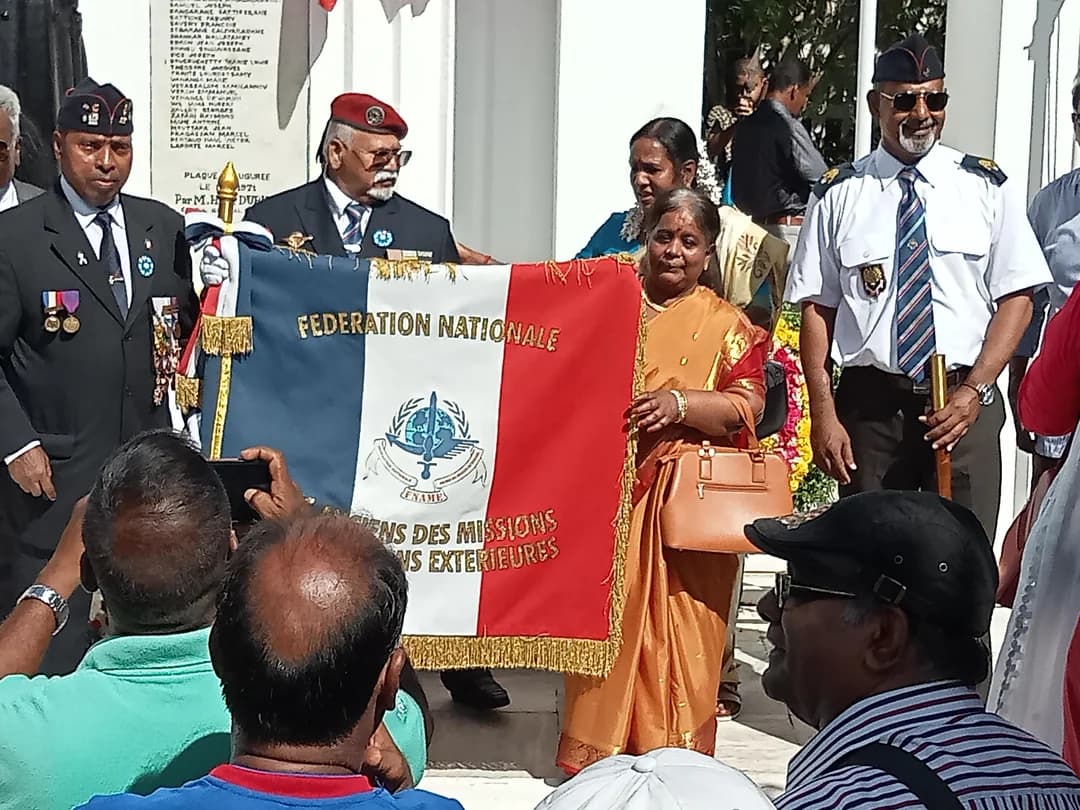
What distinguishes Pondicherry is not a special legal route but a specific historical population. Some families in this city have held French nationality for three or four generations, passed down since the renonçant era. They are French citizens living in India, served by the Consulate General on the Rue de la Caserne, commemorated at the war memorial on Goubert Avenue.
What made the renonçant system unique in world history is something worth stating plainly: it allowed people to become French without leaving India. This was not emigration. It was a change of legal identity inside India itself, available to any resident of the Five Settlements who chose to renounce personal law and submit to the French Civil Code. No other colonial system in Asia offered anything quite like it.
The question "Can anyone from Pondy become French?" once had a unique answer that existed nowhere else in the world. That answer closed in 1963. What it left behind is visible in the schools, the streets, the names on the buildings, and the community that still meets for Bastille Day on the promenade.

The Pondy App
Take this guide with you
Offline maps, street-level history, restaurant picks, and hotel guides: everything on this site, in your pocket.