
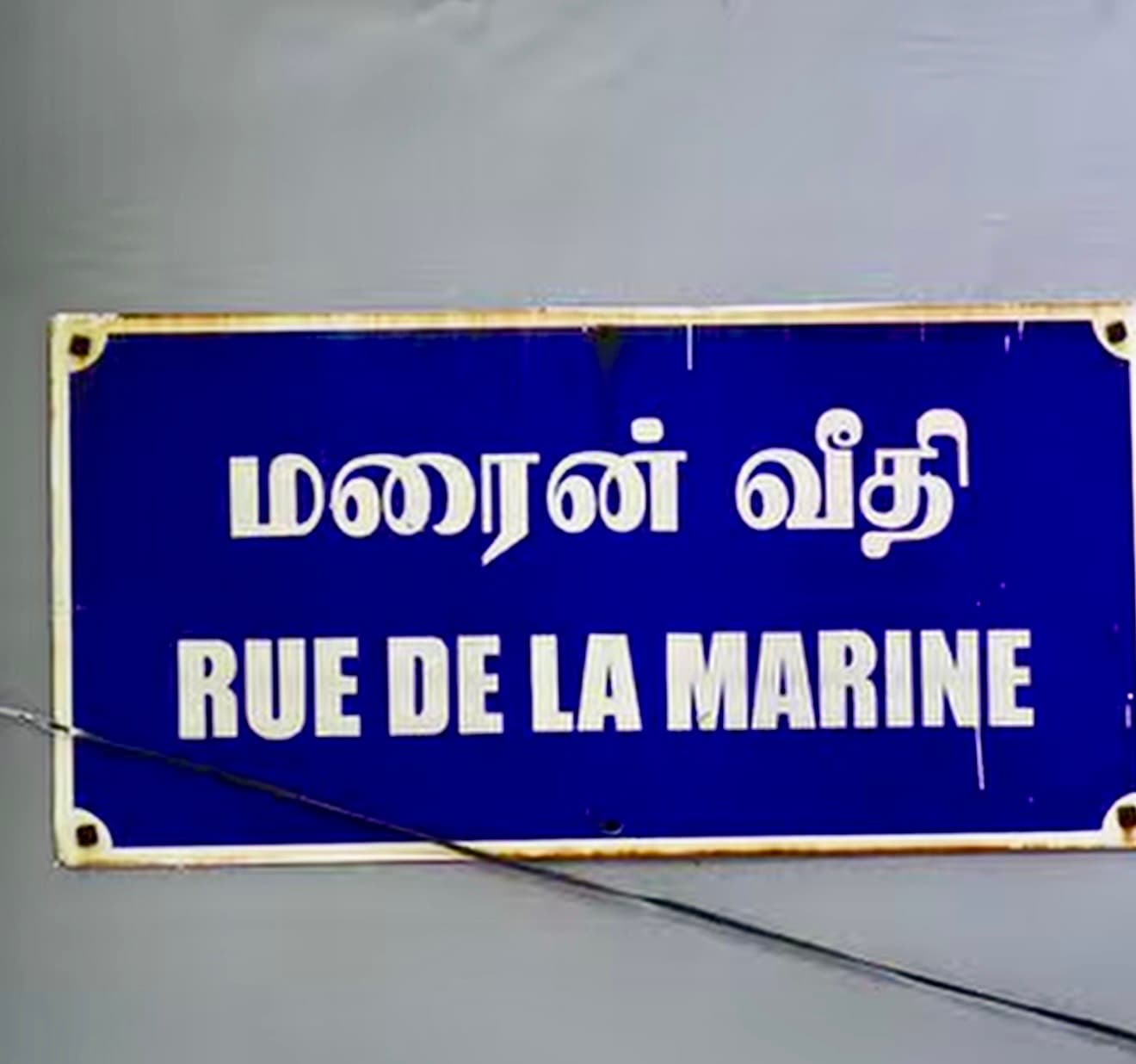
North–South Street
Rue de la Marine, White Town, Pondicherry
Named after: The French Navy & Merchant Marine
Welcome to Rue de la Marine, the street closest to the sea, named not for any person but for the sea itself. Without the marine, there was no Pondicherry. No harbour existed here. Every soldier, governor, and bale of cotton arrived through crashing surf by small boat.
You're standing on the most maritime street in a city that paradoxically never had a harbour. The Coromandel coast is a sailor's nightmare: flat, featureless, deadly surf, shifting sandbanks. Ships anchored offshore and everything (soldiers, governors, dispatches from Paris, bales of cotton) came to shore by small boat through breaking waves.
When the French navy abandoned this coast, Pondicherry starved. When Suffren's squadron left in 1783, French India was finished. When the British fleet blockaded the city in 1760–61, the population starved within months. This street's name acknowledges a structural truth: the sea decided everything here.
And yet France is still here. The French Consulate sits on this very street, right on the beach, one of the only French diplomatic missions in a former French territory anywhere in the world. The sea brought France to Pondicherry. France never quite left.
Notable on this street
- The French Consulate is on this street, right on the beach. France's last institutional foothold, on the most maritime address in the city.
- The Sri Aurobindo Ashram's main building also faces this street. Sri Aurobindo arrived by sea in 1910 on a ship named the SS Dupleix. He never left either.
- No harbour ever existed here. Every governor who ruled French India arrived on this coastline by small boat through the surf. Some left the same way, in disgrace.

The Pondy App
Take this guide with you
Offline maps, street-level history, restaurant picks, and hotel guides: everything on this site, in your pocket.